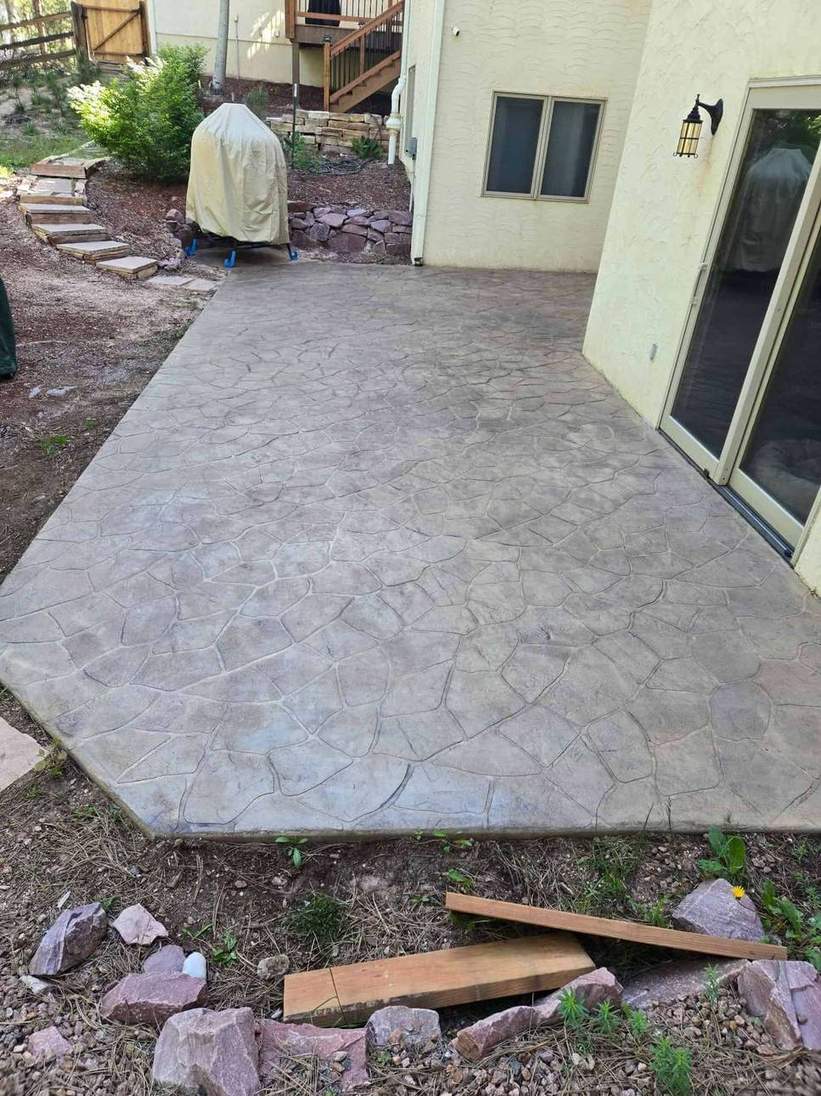
If you’ve been scrolling through backyard inspiration photos lately, you’ve probably noticed the same thing we have: a lot of patios that look like flagstone, cobblestone, or slate, but somehow don’t have the price tag or maintenance headache those materials usually come with. There’s a good chance what you’re looking at is stamped concrete, and it’s become one of the most requested patio upgrades we see across Colorado Springs backyards.
But “it looks nice in photos” isn’t really enough information to make a decision on, especially for something that’s going to sit in your backyard for the next couple decades. So let’s actually get into what stamped concrete is, what it costs, how it holds up to our specific climate, and where it makes more or less sense than the alternatives.
What Stamped Concrete Actually Is
Stamped concrete starts as a regular poured concrete slab, but before it fully cures, it gets pressed with textured stamps that imprint a pattern into the surface. That pattern can mimic natural stone, brick, slate, wood planks, or plenty of other textures. Color is added either by mixing pigment into the concrete itself, dusting a color hardener onto the surface before stamping, or applying a stain after the fact, sometimes a combination of all three for more depth and variation.
The result is a surface that reads visually as stone or pavers from a few feet away, but functions structurally like a single poured slab, meaning no individual pieces to shift, settle unevenly, or grow grass between over time.
Why It’s Become So Popular for Patios Specifically
Patios get a different kind of scrutiny than driveways. Nobody’s inviting friends over to admire the driveway, but the patio is where people actually sit, eat, and hang out, so the look matters more here than almost anywhere else on the property.
Stamped concrete hits a sweet spot that’s hard to find elsewhere:
- It delivers a genuinely upscale look, real stone or brick patios can run significantly higher in cost
- It’s a single continuous surface, so there’s no shifting, no weeds popping up between pavers, and no re-leveling every few years
- The pattern and color options are close to endless, which means your patio doesn’t have to look like everyone else’s on the block
- It photographs and shows beautifully for anyone thinking about resale value down the line
What It Actually Costs
We’re not going to pretend there’s one number that applies to every yard, because there genuinely isn’t. A few things move the price meaningfully:
Pattern complexity. A basic ashlar slate pattern in one color costs less than an intricate multi-texture design with several color layers and hand-applied detailing.
Color technique. A single integral color mixed into the concrete is the most affordable option. Adding a color hardener, or layering a hardener with an acid stain for depth and variation, adds cost but also adds a lot of visual richness that flat, single-tone concrete can’t match.
Square footage. Like most concrete work, larger patios cost less per square foot than smaller ones, since a big chunk of the cost is setup, forming, and labor that doesn’t scale down proportionally with size.
Site prep and access. A backyard that’s easy to access with equipment costs less to work in than one that requires hand-mixing and wheelbarrowing concrete through a narrow side yard, which is genuinely common on a lot of older Colorado Springs lots.
Sealing and finishing. A quality sealer is part of doing the job right, not an optional upsell, but different sealer types and finish qualities do carry different price points.
If you’re comparing this against pavers or natural stone, stamped concrete typically comes in meaningfully below both, while still landing well above a plain gray slab in terms of finished look. That middle position is exactly why it’s become such a popular choice.
How It Holds Up to Colorado Springs Weather Specifically
This is the part that actually matters most long-term, and it’s worth being straightforward about.
Freeze-thaw cycling affects stamped concrete the same way it affects any concrete. The texture and pattern don’t change the underlying material. Proper installation with the right air entrainment for our climate, combined with regular sealing, is just as important here as it is on a driveway. The good news is that a well-installed stamped patio with a maintained sealer holds up very well through our winters.
Sealing matters even more here than on a driveway. Beyond protecting against water intrusion and freeze-thaw damage, the sealer on a stamped patio is also what keeps the color vibrant and the texture from wearing smooth in high-traffic areas. An unsealed or poorly maintained stamped patio will fade and lose definition in its pattern faster than people expect, especially with our intense high-altitude sun. Resealing every two to three years keeps both the protection and the appearance where they should be.
Sun exposure fades color over time regardless of sealer. Even with a good sealer, integral color and stains will mellow slightly over the years under consistent UV exposure. This is normal and expected, and most homeowners find the color settles into a warmer, slightly more muted version of the original rather than looking faded in a bad way. If you want to minimize this, a UV-stable sealer formulated for high-altitude sun exposure is worth asking about specifically.
Slope and drainage still matter. Just like any concrete surface here, a stamped patio needs to be sloped correctly to shed water rather than let it pool in the texture grooves, where it can sit longer and contribute to freeze-thaw wear in those specific spots.
Stamped Concrete vs. Pavers vs. Natural Stone
Since this comparison comes up in almost every conversation we have about patios, here’s the honest breakdown:
Pavers offer the advantage of individual pieces, which means if one gets damaged or stained badly, you can pull and replace just that piece rather than the whole surface. The tradeoff is that individual pavers can shift, settle unevenly over time (especially with our freeze-thaw cycles working on the base beneath them), and need occasional releveling. Weeds and ants finding their way into the joints is also a real, ongoing maintenance item.
Natural stone is the most premium look and the most premium price. It’s also the most variable to install correctly, since natural stone isn’t uniform in thickness or shape the way manufactured pavers or a poured slab are. Long-term, it holds up beautifully when installed well, but it commands a price point that puts it out of range for a lot of standard residential backyard projects.
Stamped concrete lands in between: significantly more affordable than natural stone, no shifting or individual-piece maintenance like pavers, and a huge range of design flexibility. The tradeoff is that if the surface does crack (which happens with any concrete, though less with proper installation), you’re looking at either living with the crack, filling it, or in worst cases replacing the affected section, since you can’t just swap one “paver” like you could with an actual paver system.
Design Choices Worth Actually Thinking Through
Pattern. Ashlar slate and running bond brick are the most requested patterns we see, mostly because they read as timeless rather than trendy. More elaborate patterns look great but are worth committing to only if you’re confident you’ll still like them in ten years, since replacing a patio isn’t a weekend project.
Color. Warmer earth tones (tans, browns, muted terracottas) tend to complement Colorado’s natural landscape and most home exteriors in the area better than cooler grays or overly saturated colors, though this genuinely comes down to personal taste and what’s happening with your home’s existing palette.
Border details. A contrasting border color or pattern around the edge of a patio is a relatively small addition to the project that makes a noticeably bigger visual difference than people expect, especially in photos.
Integration with existing hardscaping. If you’ve got a fire pit, retaining wall, or existing walkway nearby, coordinating stamped concrete’s color and pattern with what’s already there (rather than treating the patio as a totally separate design decision) makes the whole backyard feel intentional instead of assembled in pieces over time.
Is It the Right Call for Your Backyard?
Stamped concrete tends to be the right fit if you want a genuinely elevated look without the ongoing maintenance of pavers or the price tag of natural stone, and you’re planning to stay in your home long enough to get real value out of the investment. It’s also a strong choice if your backyard sees moderate to heavy use, since a well-sealed slab handles furniture, foot traffic, and grilling stations without the wear issues that pavers can develop in high-traffic zones.
It’s a less obvious fit if you specifically want the ability to pull and replace individual sections down the road, or if your heart is set on the exact texture and irregularity that only real natural stone provides.
Let’s Talk Through Your Backyard
Every yard has its own quirks, slope, sun exposure, existing landscaping, access for equipment, and the right stamped concrete approach depends on all of it. We’d rather walk your specific space and give you a straight answer on pattern, color, and cost than have you guessing from a photo online.
Check out some of our stamped concrete patio work to get a feel for the range of what’s possible, and reach out whenever you’re ready to talk specifics for your yard.