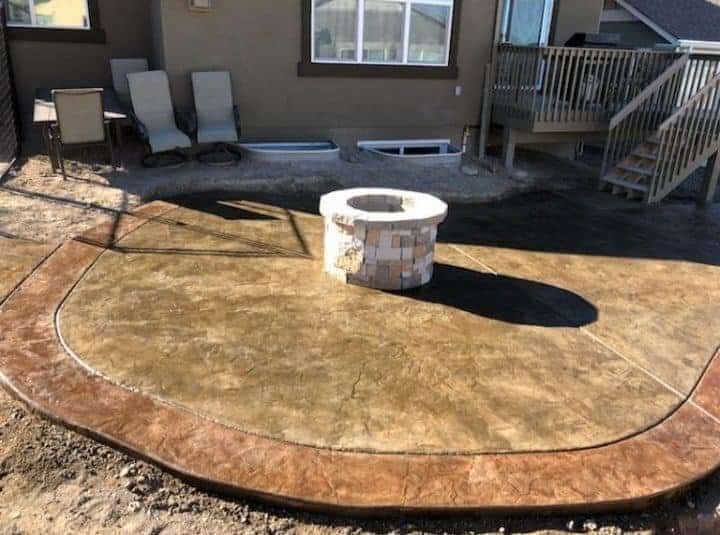
The Best Seat in the House Is Around a Fire
If you live in Colorado Springs, you already know the deal. The sun drops behind the mountains, the temperature falls off a cliff, and a backyard that felt perfect at 4 p.m. suddenly needs a jacket by 7. That is exactly when a fire pit earns its keep.
Over the last few years, fire pits have gone from a nice extra to one of the first things people ask about when they plan a patio. And it makes sense. A fire pit turns a patio into a place where people actually stay, instead of a place where you set a grill and wander back inside.
If you are thinking about adding one, concrete is a great way to do it. But there are a few things worth knowing before you start digging, because a fire pit is not just a patio with a hole in it. Let’s walk through the stuff that matters.
Why Concrete Makes Sense for a Fire Pit
Concrete checks a lot of boxes for outdoor fire features. It is sturdy, it does not rot or warp, and it handles Colorado weather better than a lot of the prefab kits you can pick up at a big box store. Those kits are fine for a season or two, but they tend to rust, shift, and crack once they have been through a few freeze-thaw winters.
A poured or built concrete fire pit can also be designed around your space instead of the other way around. Want it round, square, or sunk into the patio? Want a built-in seating wall? Want it to match the color and pattern of the rest of your hardscape? All of that is on the table.
We pour with a 4000 PSI mix reinforced with microfiber, which gives it the strength and durability it needs to hold up in our climate. Add a good finish and sealer, and the fire pit can look like it was always part of the yard.
The Part Nobody Talks About: Heat
This is the big one, and it is where a lot of DIY fire pits go sideways. Plain concrete does not love direct, sustained fire. When concrete gets very hot very fast, the moisture trapped inside it can turn to steam, and that pressure can cause cracking, chipping, or even small pieces popping off the surface.
The fix is simple, and it is the thing that separates a fire pit built to last from one that starts falling apart after a few cold nights. The fire itself should sit inside a liner, such as a steel ring or a firebrick insert, so the flames are not licking the concrete directly. The concrete becomes the structure and the style, and the liner handles the heat.
Air space matters too. A good design lets heat vent and keeps the hottest part of the fire away from the walls. When we build one, we plan for this from the start, not as an afterthought.
Wood or Gas?
This choice shapes the whole build, so it is worth thinking about early.
A wood burning pit gives you the crackle, the smell, and the classic campfire feel. It also means smoke, ash cleanup, and more sensitivity to wind and local fire rules. For a lot of people, that is the whole point.
A gas fire pit, usually run on propane or a natural gas line, starts with the turn of a knob, puts out steady heat, and produces no smoke and no ash. It does need a gas line or a tank plan, and it costs more up front. Because it takes no effort to light, a gas pit tends to get used a lot more.
Neither is better. It depends on how you want to use it, and the answer changes how we design the pit and the patio around it.
Getting the Size and Layout Right
One of the most common mistakes is making the patio too small for the fire pit. A fire pit needs breathing room, both for safety and for comfort.
Most fire pits land somewhere around three to four feet across. Around that, you want enough clear space for chairs and for people to walk behind them without bumping elbows or toes. A common rule of thumb is to leave several feet of open space on every side, and more is better if you plan to host a crowd.
A few other layout details are worth thinking about:
- Distance from the house, fences, overhangs, and trees, which matters for safety and for smoke
- Which way the wind usually blows in your yard, since a smoky seat is nobody’s favorite
- Seating, whether that is movable chairs, built-in benches, or a poured seating wall around part of the pit
- Foot traffic, so the path to the back door or the grill does not cut right through the fire zone
- Lighting, so the area still works when the fire is not going
A little planning here is the difference between a fire pit you love and one you drag your chairs away from.
Built In vs. Standalone
There are two main ways to go, and both work well.
An integrated fire pit is part of the patio itself. The slab is poured with the pit in mind, so the finish, color, and pattern flow right into it. This is the cleanest look, and it works especially well with a stamped concrete patio, where the fire feature becomes the centerpiece of the whole space.
A standalone pit sits on its own pad or in its own corner of the yard. It is a nice option when you already have a patio you love, or when you want a spot a little farther from the house for a quieter, more campfire feel.
If you want to see what a stamped patio costs and how it holds up here, we break it down in stamped concrete patios: what they actually cost, look like, and hold up to in Colorado Springs.
Colorado Rules Worth Checking First
Here is the unglamorous but important part. Before you build a fire pit, especially a wood burning one, check the rules that apply to your property.
Colorado Springs and El Paso County do put fire restrictions and burn bans in place during dry stretches, and those can change quickly. Your local fire department is the right place to confirm what is allowed at any given time. If you live in an HOA, check their guidelines too, since some limit wood fires, set distance requirements, or require approval for new structures.
This is also one reason a gas fire pit is popular around here. Depending on the restrictions in place, a gas unit is sometimes treated differently from an open wood fire. Confirm that with your local authorities rather than assuming, but it is worth asking about when you are deciding which way to go.
And whichever type you choose, keep a hose or an extinguisher close, and never leave a fire unattended. That part is not optional.
Making It Look and Feel Right
This is where the fun starts. Concrete gives you a lot of room to design.
You can color the concrete to match your house or landscaping, from warm earth tones to cooler grays. You can stamp the patio in a flagstone, slate, or cobblestone pattern. You can add a smooth or textured finish, or use decorative techniques to add depth and variation. Our decorative finishes page has a good look at what is possible.
A built-in seating wall is another favorite. It gives you permanent seating, defines the space, and doubles as a spot for drinks and s’mores supplies. Pair it with a little landscape lighting and you have an outdoor room that works for weeknight quiet and weekend crowds.
Keeping It Looking Good for Years
Fire pits live outdoors, so they take the full force of our weather. A few habits keep them in good shape.
Seal the concrete and reseal it every couple of years. Sealer keeps moisture out, which matters for freeze-thaw, and protects the color from sun and wear. Our concrete sealing and maintenance service covers exactly that.
Keep the liner clean and in good shape. If a steel ring or firebrick insert gets damaged, replace it before it can let heat reach the concrete.
Brush off ash and debris, since ash mixed with moisture can stain. And during winter, keep the pit cover on if you have one, especially if you are not using it often.
Do those few things and a well-built concrete fire pit should serve you for a long time.
The Bottom Line
A concrete fire pit is one of the best upgrades you can make to a Colorado backyard. It extends your season, gives the family a reason to gather, and adds real value to your outdoor space. The key is building it right: a proper liner to handle the heat, a layout with enough room to breathe, a finish that matches your yard, and a quick check of local fire rules before you start.
Get those pieces right and you will have a spot you reach for on every cool evening, long after the novelty wears off.
Let’s Plan Your Fire Pit
Whether you are adding a fire pit to a patio you already have, or building a whole new outdoor space around one, we are happy to talk through the options. Take a look at our fire pit installations and our concrete patios for ideas.
Reach out and let’s figure out what works for your yard.