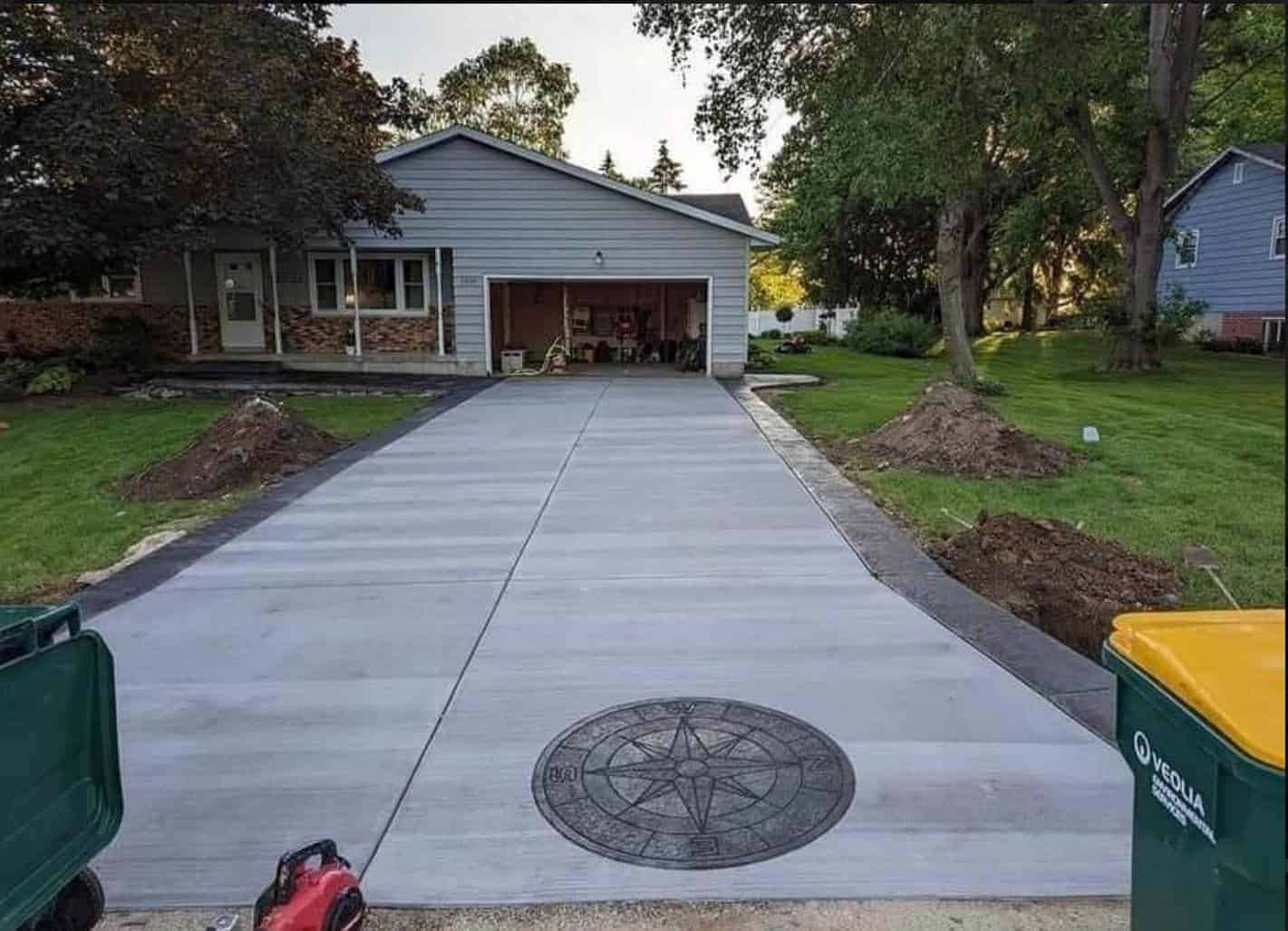
It’s Cold Out. Can the Driveway Wait Until Spring?
It is late October, the first real cold snap is on its way, and you are staring at a cracked driveway or a half finished backyard project wondering if you just missed your window.
Good news first. In Colorado Springs, you did not miss it. Concrete can absolutely be poured in winter here, and plenty of it is. Our winters are cold, but they are also sunny, and many days climb well above freezing even in the middle of January.
The less fun news is that winter concrete is not the same as summer concrete. It takes more planning, a few extra materials, and a crew that knows what it is doing. Let’s walk through what actually changes, so you can decide whether to pour now or wait.
What Cold Does to Fresh Concrete
Concrete does not dry, it cures. That is a chemical reaction between cement and water, and like most chemical reactions, it slows down when it gets cold. In warm weather, concrete gains strength quickly. In cold weather, that process drags, and in very cold weather it can nearly stop.
The real danger is freezing. If fresh concrete freezes before it has gained enough strength, the water inside turns to ice, expands, and damages the structure of the concrete while it is still forming. That damage is permanent. It can leave you with a weak, crumbly surface and a slab that never reaches the strength it was supposed to have.
The goal of every winter pour comes down to one thing: keep the concrete warm enough, long enough, that it gets past that vulnerable stage. Everything else is a method for doing that.
Where Colorado Springs Actually Stands
Here is the thing about our climate. We do not live in a place where it stays below zero for months. We get cold nights and bright days, with plenty of afternoons in the 40s and 50s even in the dead of winter. That is a very different situation from a place that stays locked in a deep freeze.
That swing helps us in some ways, since daytime warmth gives concrete a chance to get going. It also makes planning important, because the overnight lows are what put fresh concrete at risk. A pour that is fine at 2 p.m. can be in trouble at 2 a.m. if nobody planned for it.
How a Good Crew Handles a Winter Pour
Cold weather concrete is a skill. Here is what goes into doing it right.
- Checking the ground first. Concrete should never be placed on frozen subgrade. Frozen ground can thaw and settle later, which leads to cracking and uneven slabs. If the ground is frozen, it needs to be thawed and prepped before anything gets poured.
- Adjusting the mix. We use a quality mix, reinforced with microfiber, and in cold weather the mix can be adjusted with heated water or additives to keep the cure moving.
- Using the right accelerators. Certain admixtures speed up the cure so the concrete gains strength faster. These need to be chosen carefully, since some can affect color or other properties of the finished surface.
- Covering and insulating. Once the concrete is placed and finished, it gets covered with insulated blankets or similar protection to trap heat and hold it in during those cold nights.
- Blocking wind. Wind pulls heat and moisture out of fresh concrete fast, so windbreaks can make a real difference.
- Watching the clock. Finishing takes longer in the cold, and the crew has to be patient and not rush the surface before the concrete is ready.
None of this is complicated, but all of it has to happen, and it has to happen on time. This is the part a crew without winter experience tends to skip.
What Doesn’t Change in Winter
Some things about good concrete are the same year round. The base still has to be prepped and compacted. The slab still needs proper thickness, and we still recommend at least four inches for residential driveways, with five to six inches for heavier traffic. Drainage and slope still matter, and so does air entrainment, which helps concrete handle our freeze-thaw cycles.
If you have not read it yet, we dig into that last point in why Colorado’s freeze-thaw cycle wrecks concrete. The short version is that a slab poured right in winter should perform just as well as one poured in July.
Projects That Are Better in Winter vs. Projects That Can Wait
Here is where we try to be honest rather than just take the job.
Plain structural work like driveways, walkways, steps, and pads for sheds or garages are usually good winter candidates. If a repair is urgent, or you have a safety problem like a broken step, waiting does not make sense, and we can plan around the weather.
Decorative work is more sensitive. Colored concrete, stamped patterns, and overlays all depend on temperature for color, texture, and bonding, and many of the sealers and overlay products used for them have minimum temperature requirements. A big stamped patio in a deep cold stretch is possible, but it carries more risk, and for a lot of projects the smarter move is to wait for a warmer stretch or for spring.
If you are not sure which camp your project falls in, ask. A good contractor will tell you when waiting is the better option, even if it means pushing the job back.
Flexibility Is Part of the Deal
One thing to expect with winter work is a schedule that bends with the weather. If a hard freeze, heavy snow, or a nasty wind shows up on the forecast, a good crew may move your pour to a better day rather than gamble with your concrete.
That can feel frustrating, but it is a sign they are protecting your investment. A contractor who pours no matter what the thermometer says is not doing you any favors.
Your First Winter on New Concrete
Whether you pour in winter or in summer, the first cold season on new concrete deserves some care.
Skip the rock salt. Traditional de-icers can damage young concrete, especially during its first winter. Sand for traction, or a gentler product, is a better choice. We cover the details in our freeze-thaw post.
Be patient with the surface. New concrete is still gaining strength and drying out for a good while after the pour, so avoid dragging heavy objects or running plows hard across it in the early weeks.
Seal it when the timing is right. Sealer protects against moisture and de-icers, but most sealers need the surface to be above a minimum temperature to cure properly. If the weather does not cooperate, we may recommend sealing in spring. Our concrete sealing and maintenance service can pick up right where the pour left off.
Should You Pour Now or Wait?
A few questions can help you decide.
Is the problem urgent? A crumbling driveway apron, a trip hazard, or a failing step may be worth handling now. If you are not sure whether your driveway has reached that point, our post on 5 signs your concrete driveway needs to be replaced can help.
Is it a big decorative project? If so, ask about waiting for better temperatures so the color and finish come out the way you want.
Do you want to get on the calendar early? Even if the work happens in spring, booking now means you are not scrambling when everyone else decides to start projects at the same time.
The Bottom Line
Winter does not have to mean putting your concrete project on hold. With the right prep, the right mix, and a crew that knows how to protect a fresh pour, concrete can be placed and cured successfully during the cold months in Colorado Springs. It just takes more care, a bit more flexibility, and some honest conversation about which projects make sense now and which ones are worth waiting on.
If we tell you it is better to wait, it is because we want your concrete to look good and last, not because we are dodging the work.
Let’s Talk About Your Project
Whether you are dealing with a driveway that cannot make it through another winter, or you just want to get a spring project on the schedule, we are happy to walk through the options with you. We serve Colorado Springs, Monument, Fountain, Castle Rock, and the surrounding areas, and we pour year round when conditions allow.
Reach out and let’s figure out the best timing for your project.